


![AutoFull G7 Ergonomic Gaming Chair [🍂Autumn Special Offer] AutoFull US](http://www.autofull.com/cdn/shop/files/gaming_chair_1_c5f546de-af69-4926-b5e4-a859ea893772.jpg?v=1777458714&width=70)


![AutoFull G7 Gaming Chair & A4 Pro Gaming Desk Bundle [💥Combo Off] AutoFull US](http://www.autofull.com/cdn/shop/files/20251109-151002.jpg?v=1762672486&width=70)
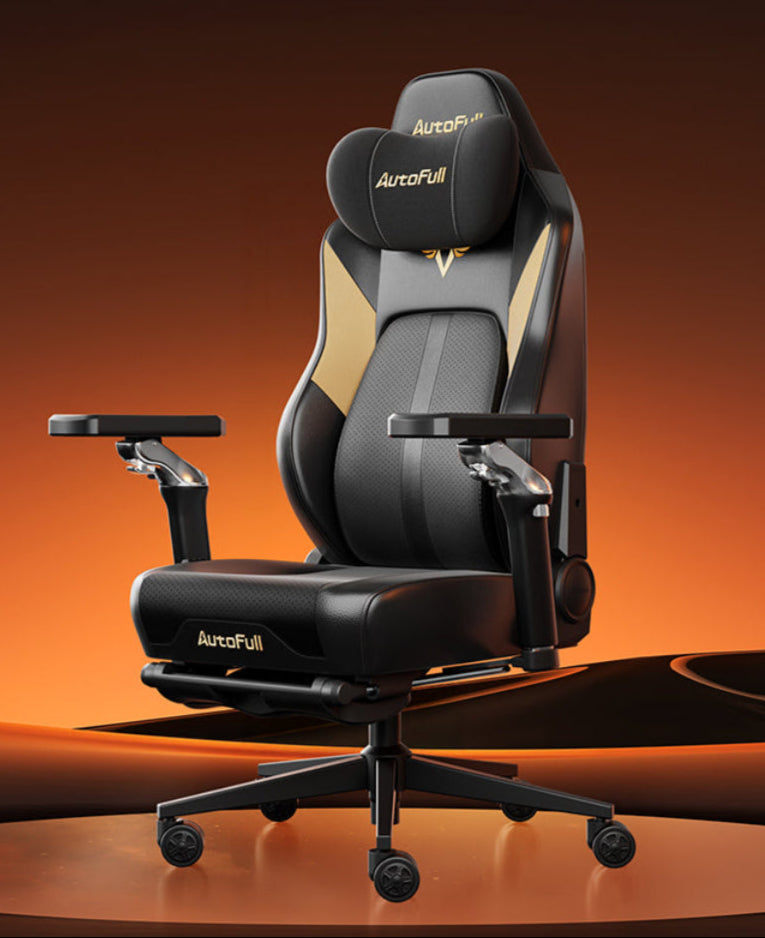


The shift toward digital workspaces means professionals now spend an average of 8 to 10 hours a day seated. Prolonged sitting in standard, rigid seating often leads to chronic musculoskeletal issues, including neck stiffness and severe lower back pain. Upgrading to a specialized ergonomic desk chair is no longer a luxury; it is a medical necessity for maintaining spinal health. This guide explores the factual biomechanical advantages of ergonomic seating, detailing exactly how these adjustable features prevent injury and enhance daily productivity.
Top 5 Benefits of Using an Ergonomic Desk Chair
Investing in an ergonomic desk chair provides immediate physical relief and long-term health protection. The primary benefits are rooted in how the chair adapts to the user's specific body mechanics.
1. Superior Posture Support
Traditional chairs force the spine into a "C" shape, causing the shoulders to roll forward and the chest to collapse. An ergonomic posture chair is engineered to support the spine's natural "S" curve. By utilizing a contoured backrest that pushes gently against the lower spine, the chair physically prevents the pelvis from rotating backward. This constant, passive support ensures that the ears, shoulders, and hips remain vertically aligned, eliminating the muscle fatigue associated with slouching.
2. Effective Back and Neck Pain Relief
The leading cause of occupational disability is lower back pain. Standard chairs lack the depth and height adjustments needed to support different body types. An ergonomic chair for back pain features adjustable lumbar support that can be moved up or down to fit precisely into the curve of the user's spine. Additionally, adjustable headrests support the weight of the skull, significantly reducing the mechanical tension placed on the cervical vertebrae and trapezius muscles.
3. Enhanced Comfort & Pressure Distribution
Sitting places immense concentrated pressure on the hips, buttocks, and thighs. An ergonomic desk chair utilizes high-density cold-cure foam or tensioned mesh to distribute this weight evenly across the seat pan. Many models also feature a "waterfall" seat edge—a design where the front of the seat curves downward. This specific contouring prevents the seat from digging into the back of the knees, ensuring unobstructed blood circulation to the lower legs and preventing numbness or sciatica.
4. Boosted Work Productivity
Physical discomfort is a major distraction. When a worker is constantly shifting positions to relieve an aching back or stiff neck, their cognitive focus breaks. By providing a pain-free seating experience, an ergonomic posture chair allows the user to remain engaged in deep work for longer periods. Studies in occupational health consistently show that optimizing a workstation with an ergonomic chair for work from home directly correlates with fewer errors and higher task completion rates.
5. Long-term Health & Durability
High-quality ergonomic seating is built to withstand thousands of hours of use without degrading. Standard office chairs quickly lose their cushioning, leaving the user sitting on hard plastic or wood. An ergonomic desk chair is a preventative health tool. By maintaining proper spinal alignment year after year, it helps prevent chronic conditions such as herniated discs, joint degeneration, and repetitive strain injuries (RSI).
How an Ergonomic Chair for Back Pain Specifically Works
When you sit upright without support, the pressure on your lumbar discs is up to 40% higher than when you are standing.
An ergonomic chair for back pain mitigates this load through dynamic sitting mechanics. The key feature is the synchronous tilt mechanism. When the user leans back, the backrest and the seat pan tilt at different ratios (usually 2:1). This opens the angle between the torso and the thighs, which stretches the hip flexors and allows spinal fluid to rehydrate the compressed discs.
Unlike a static chair, an ergonomic chair for back pain encourages continuous micro-movements. This active sitting keeps the core muscles engaged and prevents the stiffness that occurs when muscles are locked in a single position for hours.
Why It’s the Best Desk Chair for Back Pain
There are countless chairs marketed for comfort, but the best desk chair for back pain is defined by its level of hyper-adjustability. A chair cannot be truly ergonomic if it cannot be tailored to the exact millimeter of the user's body.
The best desk chair for back pain will always include 3D or 4D armrests. These armrests can be adjusted for height, width, depth, and pivot angle. When the arms are properly supported at a 90-degree angle, the weight of the arms is lifted off the shoulders and neck. If the armrests are too low, the user will slouch forward to reach them; if they are too high, the user will shrug their shoulders, leading to tension headaches. The ability to lock the lumbar support depth and adjust the seat pan slider ensures that both a 5-foot-tall user and a 6-foot-tall user receive the exact same orthopedic benefits from the desk chair for back pain.
Choose the Right Ergonomic Chair for Work from Home
The transition to remote work has highlighted the inadequacy of dining room chairs or cheap gaming setups for eight-hour shifts. Selecting the right ergonomic chair for work from home requires evaluating your specific environment and daily habits.
- Material Selection: If your home office lacks air conditioning, an ergonomic chair for work from home with a full mesh back and seat is essential. Mesh allows for continuous airflow, dissipating body heat and preventing sweat buildup during long meetings. If you prefer a softer feel, look for breathable fabric over high-density foam.
- Space Constraints: Home offices are often smaller than corporate cubicles. Ensure the ergonomic posture chair you select has a base that fits under your specific desk and casters (wheels) that are appropriate for your flooring. Hard nylon casters are best for carpets, while soft polyurethane casters prevent scratching on hardwood floors.
- Aesthetic Integration: Because the chair will be in your living space, finding an ergonomic chair for work from home that features a clean, minimalist design rather than an aggressive, bulky gaming aesthetic is often a priority for remote professionals.
Invest in an Ergonomic Desk Chair
An ergonomic desk chair is a vital investment in your physical health and daily productivity. By supporting the natural curve of your spine and promoting dynamic movement, an ergonomic posture chair effectively eliminates the back and neck pain associated with prolonged sitting. Whether you are outfitting a corporate office or searching for the perfect ergonomic chair for work from home, prioritizing hyper-adjustability and proper lumbar support ensures you can work comfortably and safely for years to come.
FAQs about ergonomic chairs
Do ergonomic chairs actually help with back pain?
Yes. By providing adjustable lumbar support and allowing for synchronous tilt, an ergonomic chair for back pain significantly reduces the mechanical pressure on the lower spinal discs, which is the primary cause of sitting-related back pain.
How long should I sit in an ergonomic chair each day?
Even with the best desk chair for back pain, it is recommended to stand up and move for 5 to 10 minutes every hour. Ergonomic chairs are designed to make prolonged sitting (up to 8-10 hours) safe, but they do not replace the biological need for full-body movement.
What is the difference between an ergonomic chair and a standard office chair?
A standard office chair typically only offers basic height adjustment. An ergonomic desk chair provides multiple points of customization, including seat depth, lumbar height/tension, armrest positioning, and backrest recline, allowing it to adapt to the user's specific anatomy.
Are mesh ergonomic chairs better than foam ones?
Mesh chairs offer superior breathability and temperature control, making them ideal for warm environments. Foam chairs provide a more traditional, cushioned feel. The choice depends entirely on personal preference regarding temperature regulation versus cushioning.


