


![AutoFull G7 Ergonomic Gaming Chair [🍂Autumn Special Offer] AutoFull US](http://www.autofull.com/cdn/shop/files/gaming_chair_1_c5f546de-af69-4926-b5e4-a859ea893772.jpg?v=1777458714&width=70)


![AutoFull G7 Gaming Chair & A4 Pro Gaming Desk Bundle [💥Combo Off] AutoFull US](http://www.autofull.com/cdn/shop/files/20251109-151002.jpg?v=1762672486&width=70)
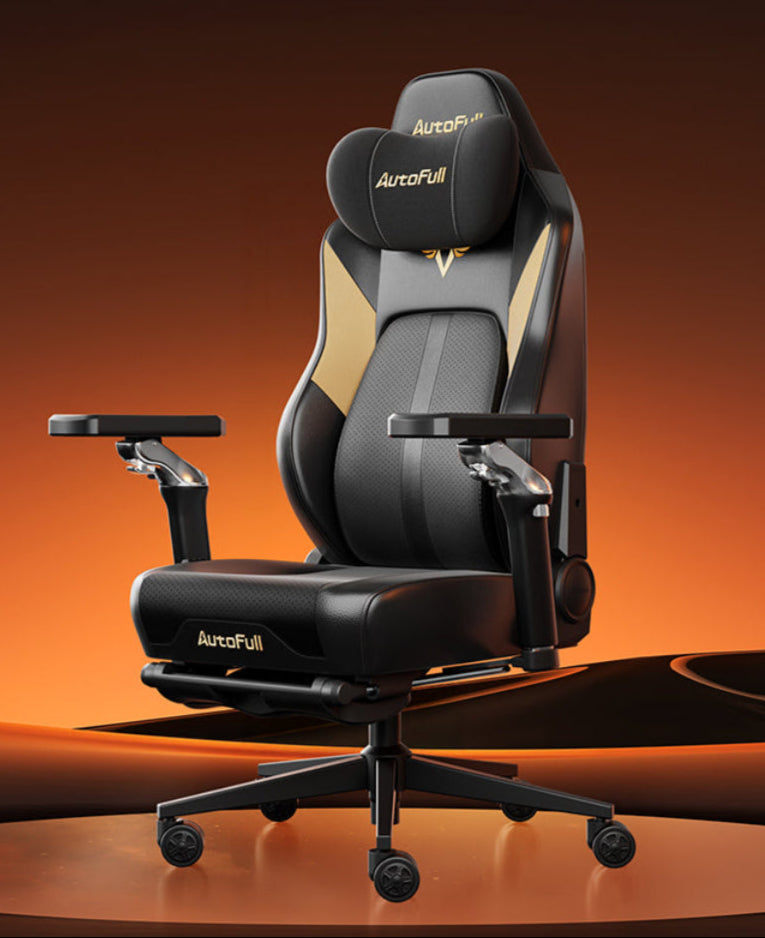


If you spend your workday or leisure time seated at a desk, you have likely experienced physical discomfort. Hip pain is one of the most common complaints among remote workers, office employees, and gamers. This article explains the physiological causes of joint soreness, identifies the optimal posture to reduce stress on your pelvis, and provides detailed criteria for selecting corrective seating. Read on to discover how to align your body and protect your musculoskeletal health.
What Causes Hip Pain From Sitting Too Long?
Sitting is a static posture that places unique mechanical loads on your lower body. When you sit, your hips are held in a flexed position for extended periods, which differs significantly from their natural, upright state. This prolonged flexion alters the length, tension, and blood flow of the surrounding soft tissues, leading to joint strain.
Hip Flexor Shortening and Tightness
The hip flexors, primarily the psoas major and iliacus muscles, contract to lift your leg toward your torso. When you remain seated, these muscles are kept in a shortened state. Over time, this causes them to adaptively shorten and tighten. Experiencing hip pain from sitting too long is often a direct result of these shortened muscles pulling abnormally on your hip joints and lower back when you attempt to stand up.
Compression of the Gluteal Muscles and Nerves
Sitting forces your body weight onto your gluteus muscles and the piriformis muscle. This static pressure causes compression, which restricts local blood flow and deprives the tissues of oxygen. Furthermore, the sciatic nerve passes directly beneath the piriformis muscle. When you experience hip pain from sitting too long, the prolonged compression can irritate this nerve, leading to radiating pain or a deep ache in your outer hip and buttocks.
Reduced Joint Lubrication and Stiffness
Your hip joints rely on movement to circulate synovial fluid, which lubricates the joint cartilage. Static sitting halts this natural lubrication process. Without regular movement, the cartilage becomes dry and friction increases within the joint capsule. This lack of movement is a primary driver of hip pain from sitting too long, manifesting as acute stiffness and a restricted range of motion.
Find The Best Sitting Position For Hip Pain
Correcting your posture is the most immediate way to alleviate pressure on your pelvic joints. By aligning your spine and lower limbs properly, you distribute your body weight evenly across your skeletal structure rather than forcing your muscles and ligaments to hold you in place.
Establishing the 90-to-100 Degree Pelvic Angle
Maintaining a rigid 90-degree angle can increase pressure on your lumbar spine and hip joints. Instead, the best sitting position for hip pain involves opening your hip angle slightly to between 100 and 110 degrees. Sloping your thighs slightly downward reduces the compression on your hip sockets and allows your hip flexors to remain in a more relaxed, elongated position while you work.

Achieving Proper Foot and Knee Alignment
To maintain pelvic stability, your feet must rest completely flat on the floor or a solid footrest. Your knees should be positioned slightly lower than or level with your hips. This height relationship is a key component of the best sitting position for hip pain because it prevents your pelvis from tucking backward, which overstretches the gluteal muscles and places excessive stress on the lower back.
Distributing Weight Evenly on Sitting Bones
Many people unconsciously lean to one side or cross their legs while sitting. This asymmetrical posture places a disproportionate amount of weight on one hip joint and twists the pelvis. To implement the best sitting position for hip pain, ensure your weight is centered equally on both sitting bones. Keep your shoulders aligned over your hips and avoid crossing your legs.
Look For Proper Ergonomic Chair Hip Support
While posture is important, maintaining correct alignment is difficult without the right equipment. High-quality office chairs are engineered to assist your body in maintaining a neutral posture, reducing the active muscular effort required to sit comfortably.
Seat Pan Contour and Waterfall Edges
A flat, unpadded seat pan forces your body to slide forward, ruining your spinal alignment. Effective ergonomic chair hip support features a contoured seat pan that cradles your thighs and glutes, distributing your weight over a larger surface area. Additionally, a downward-sloping front seat edge (waterfall front edge) reduces pressure on the underside of your thighs, keeping blood circulating freely to your hip joints.
Pelvic and Lumbar Support Integration
The lumbar spine and the pelvis are directly connected; if your lower back slumps, your pelvis tilts backward, aggravating your hips. An ergonomic chair for hip pain must include adjustable lumbar support that maintains the natural inward curve of your lower spine. This specialized ergonomic chair hip support keeps your pelvis in a neutral upright position, preventing muscle strain.
Seat Depth and Tilt Adjustability
 A seat pan that is too deep will press against the back of your knees, forcing you to sit forward and lose lumbar support. Choosing an ergonomic chair for hip pain with adjustable seat depth allows you to leave a two-inch gap between the seat edge and the back of your knees. This, combined with active tilt adjustability, provides customizable ergonomic chair hip support tailored to your unique leg length.
Choose A Gaming Chair For Hip Pain Relief
Gaming chairs have evolved from simple racing-style seats into highly adjustable ergonomic tools. Because gamers sit for continuous, intense sessions, these chairs incorporate features specifically designed to manage pelvic strain and lower body fatigue.
Recline and Tilt-Lock Mechanics
Standard office chairs often have limited recline options. In contrast, a high-quality gaming chair for hip pain relief offers a deep recline feature. Reclining periodically shifts a portion of your upper body weight onto the backrest, immediately reducing the compressive force on your hip joints and lumbar disc space.
High-Density Cold-Cured Foam
Many cheap chairs use standard cut foam that bottoms out within a few months, leaving you sitting on hard plastic or metal plates. An advanced ergonomic chair for hip pain or premium gaming chair uses cold-cured, high-density foam. This material conforms to your body shape to relieve pressure points while retaining its firm supportive structure, making it an excellent choice for a gaming chair for hip pain relief.
Wide, Flat Seat Cushions
Many traditional racing-style gaming chairs feature raised side bolsters that mimic race car seats. However, these bolsters can compress your thighs inward, restricting movement and pinching your hip joints. When selecting a gaming chair for hip pain relief, opt for models with wide, flat seat cushions that allow your hips to spread naturally.
Discover How To Reduce Hip Pain While Gaming
Even the best chair cannot fully offset the physical toll of static sitting. To protect your joints during long gaming or work sessions, you must actively incorporate healthy habits, movement, and stretches into your daily routine.
Implementing the 30-Minute Movement Rule
The most effective strategy on how to reduce hip pain while gaming is to break up static postures. Set a timer for every 30 to 45 minutes to stand up, walk around for two minutes, or perform light standing stretches. This brief activity reintroduces synovial fluid into your hip joints and restores blood flow to compressed gluteal tissues.
Targeting Hip Flexors and Glutes with Stretching
To actively counteract the tightening effects of sitting, perform targeted stretches between game matches or work tasks. When researching how to reduce hip pain while gaming, focus on the half-kneeling hip flexor stretch and the seated figure-four stretch. The figure-four stretch is highly effective because it gently opens up the hip joint rotators and releases tension in the deep piriformis muscle.
Utilizing Footrests and Pelvic Cushions
If your desk is not height-adjustable, you may be forced to raise your chair, leaving your feet dangling. Dangling feet pull your pelvis forward, straining your hip flexors. To apply best practices on how to reduce hip pain while gaming, use an angled ergonomic footrest to ensure your knees remain at a stable, supported height. You can also use a memory-foam coccyx cushion to relieve direct pressure on your tailbone.
Conclusion
Persistent hip discomfort after sitting is a clear indicator that your posture or your chair requires adjustment. By understanding the mechanical causes of joint compression and implementing the correct sitting angles, you can prevent chronic stiffness. Investing in supportive seating, such as an ergonomic chair or a flexible gaming seat, provides the physical foundation your body needs. Combine this hardware with regular movement and stretching to maintain healthy, pain-free hips for years to come.
FAQs
Why do my hips ache specifically on the outer sides after sitting?
Outer hip pain is frequently caused by tension in the Tensor Fasciae Latae (TFL) muscle and the Iliotibial (IT) band, or inflammation of the hip bursae (bursitis). Sitting compresses the fluid-filled sacs (bursae) on the sides of your joints, while keeping the IT band in a tight, bent position.
Can a hard seat cushion cause hip pain?
Yes. A hard seat cushion concentrates all your body weight onto the sitting bones, leading to localized pressure, reduced blood circulation, and strain on the surrounding hip ligaments and gluteal muscles.
How high should my chair seat be to prevent hip pain?
Your chair seat should be adjusted so that your feet rest flat on the floor, with your thighs parallel to the ground or sloping slightly downward. Your hips should be positioned level with or slightly higher than your knees to prevent pelvic tilt.


