


![AutoFull G7 Ergonomic Gaming Chair [🍂Autumn Special Offer] AutoFull US](http://www.autofull.com/cdn/shop/files/gaming_chair_1_c5f546de-af69-4926-b5e4-a859ea893772.jpg?v=1777458714&width=70)


![AutoFull G7 Gaming Chair & A4 Pro Gaming Desk Bundle [💥Combo Off] AutoFull US](http://www.autofull.com/cdn/shop/files/20251109-151002.jpg?v=1762672486&width=70)
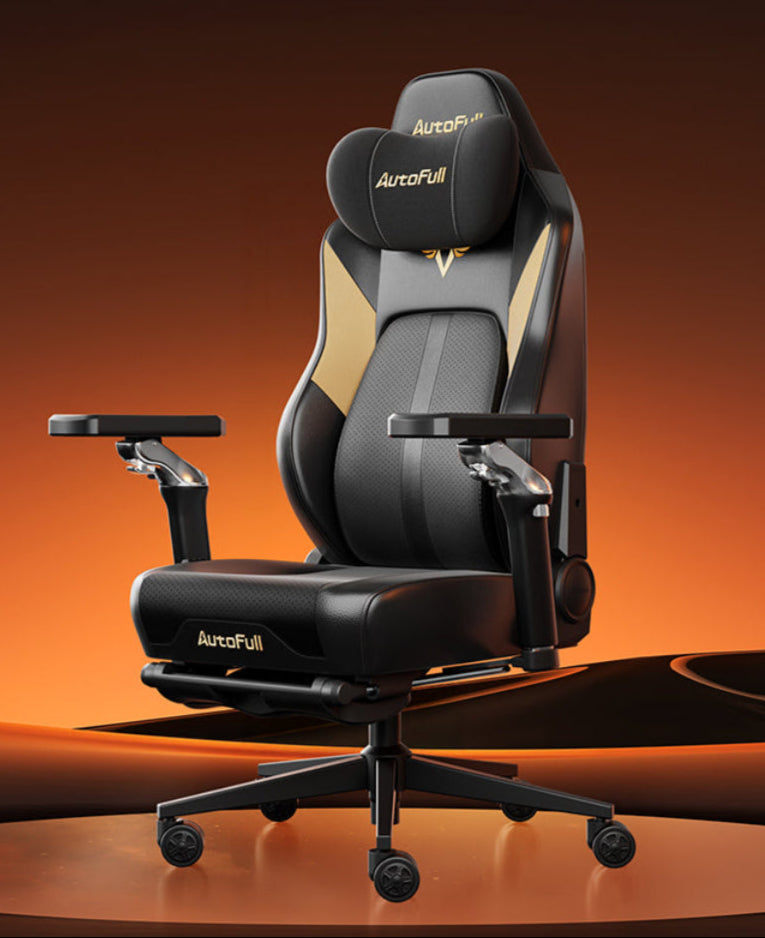


To measure yourself for a gaming chair, record your seated height, hip width, thigh length, and desk clearance, then compare those numbers with chair specifications. A gaming chair for adults feels more comfortable when seated measurements lead the choice.
Prepare Your Tape Measure
Use a flexible tape measure, a firm chair, and your current desk. Wear the clothes and shoes you usually use at your desk, then sit with your feet flat on the floor.
Write down each number in inches or centimeters and stick with one unit on every product page. Keep your back against the backrest during seated measurements. Ask someone to help with shoulder and seated-height measurements if you can.
Measure your desk too. Note the floor-to-desk height, the space under the desk, and the distance between desk legs or drawers. Those numbers show if your armrests, thighs, and casters have enough room.
How Do You Measure Seated Height?
Measure from the floor to your shoulders and head to match your torso with the chair backrest and headrest.
- Sit fully back in a firm chair with both feet flat on the floor.
- Measure from the floor to the top of one shoulder.
- Measure from the floor to the top of your head.
- Repeat both measurements once for a quick accuracy check.
Use your shoulder height to assess backrest coverage. Use your head height to assess headrest range. Standing height provides a rough reference, while seated height gives a closer fit for a tall gaming chair because torso length differs from person to person.

How Do You Measure Hip Width?
Measure your widest seated hip or thigh area, then compare the larger number with the chair's usable seat width.
- Sit near the front of your current chair with your feet flat and knees facing forward.
- Measure across the widest part of your hips.
- Measure across the outer edges of both thighs where they rest on the seat.
- Use the larger measurement for comparison.
Check the listed width between armrests or side bolsters, not the chair's overall outside width. Your seat needs enough space for normal movement and everyday clothing without pressure at the sides. A seating measurement review identifies hip width, seat width, knee-to-seat depth, and seat height as connected fit measures.
How Do You Measure Seat Depth?
Measure from the back of your buttocks to the crease behind your knee to find a suitable seat depth.
- Sit fully against the backrest with your feet flat on the floor.
- Place one end of the tape measure at the back of your buttocks.
- Run the tape along your thigh to the crease behind your knee.
- Compare that result with the listed chair seat depth.
A suitable seat supports most of your thigh and leaves a small gap before the back of your knee. Too much depth can pull your back away from the backrest, while too little depth leaves more of your thighs unsupported. A seat-depth comfort study found that seat depth affected comfort ratings during a 90-minute sitting period.
How Do You Compare Chair Measurements?
Use a gaming chair size chart to compare your measurements with the chair's seat width, seat depth, backrest height, armrest range, and recommended user height.
| Your Measurement | Chair Specification | What It Tells You |
| Seated shoulder height | Backrest height | Upper-back coverage |
| Seated head height | Headrest range | Neck support during recline |
| Hip and thigh width | Seat width and armrest spacing | Room at the seat and sides |
| Buttock-to-knee length | Seat depth | Thigh support and knee clearance |
| Floor-to-elbow height | Armrest range | Fit under your desk |
Compare the listed dimensions with your own numbers before ordering. Compare your measurements with our M6 Ultra 2.0 Ergonomic Gaming Chair and review the current specifications for your preferred option.
Does Your Desk Change Chair Fit?
Yes, desk height and under-desk space can change how a chair feels in daily use. A chair may match your body measurements yet still feel awkward if its armrests sit above the desk or its seat height leaves your feet hanging.
Measure from the floor to the underside of the desk, then compare it with the lowest and highest armrest settings. Measure the open space under the desk as well. Your thighs need room to move without contact with the desk edge or a drawer.
For keyboard and mouse use, keep your shoulders relaxed, elbows close to your sides, and feet flat on the floor or a footrest. Computer workstation seating covers adjustable backrests and armrests that support a relaxed working posture.
Check desk measurements before you choose an adult gaming chair, especially if your desk has drawers, a thick apron, or fixed keyboard hardware.

Choose a Chair That Fits Your Measurements
Use your seated height, hip width, thigh length, and desk dimensions to compare real chair specifications. A gaming chair for adults becomes easier to choose when your measurements lead the decision, with style and extra features coming after fit.
Common Gaming Chair Fit Questions
Q1: Can Gaming Chair Dimensions Vary Between Brands?
Yes, brands may measure the same area in different ways. One seat-width figure may refer to the flat sitting area, while another includes side bolsters or the outer shell. Check each dimension label before comparing models. Product photos with a measurement diagram can clarify where the brand placed the tape measure.
Q2: Do Gaming Chair Wheels Add to Seat Height?
Yes, casters and the chair base are part of the floor-to-seat measurement. Wheel size can change the lowest and highest seat height, especially across different models. Check the full seat-height range listed for the exact chair version, then compare it with your desk and preferred foot position.
Q3: Can Side Bolsters Affect Chair Fit?
Yes, raised side bolsters can reduce the usable flat area of a seat. A chair may list a generous overall width while leaving less room where your hips and thighs rest. Look for an interior seat-width measurement or a clear seat photo before choosing a chair with pronounced side bolsters.
Q4: Does a Footrest Need Extra Room?
Yes, an integrated footrest needs clear space in front of the chair. Check its extension length and keep the area free of desk legs, storage boxes, cables, and rugs that may catch the moving parts. A footrest works best when you can extend it fully without changing your normal desk setup.


