


![AutoFull G7 Ergonomic Gaming Chair [🍂Autumn Special Offer] AutoFull US](http://www.autofull.com/cdn/shop/files/gaming_chair_1_c5f546de-af69-4926-b5e4-a859ea893772.jpg?v=1777458714&width=70)


![AutoFull G7 Gaming Chair & A4 Pro Gaming Desk Bundle [💥Combo Off] AutoFull US](http://www.autofull.com/cdn/shop/files/20251109-151002.jpg?v=1762672486&width=70)
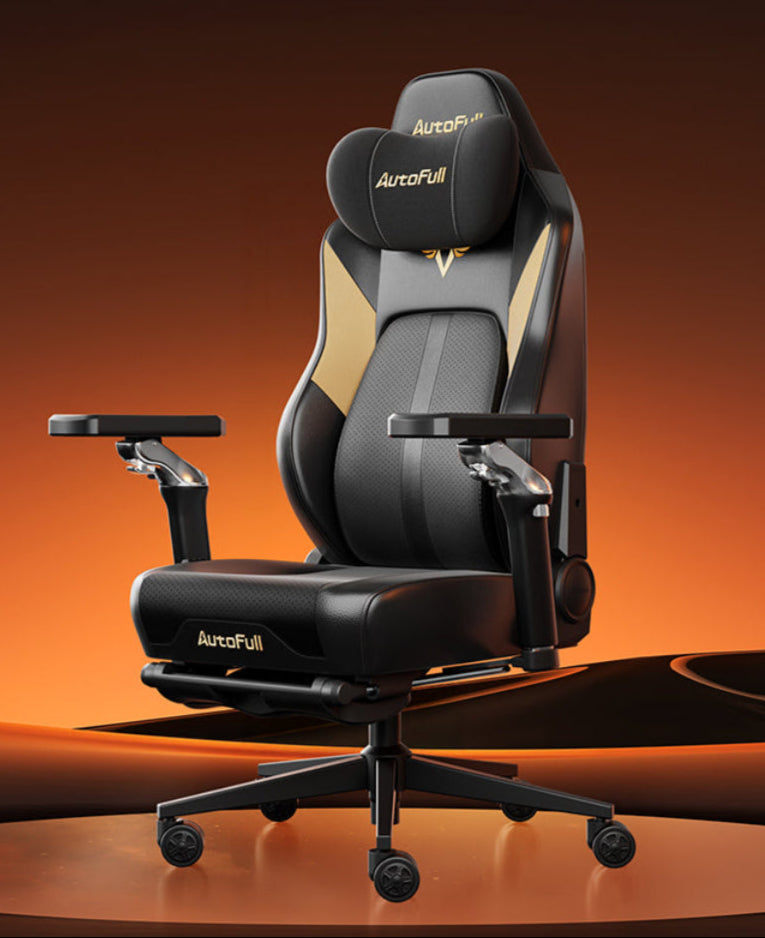


A gaming chair with adjustable armrest can help you match your chair to your desk, mouse position, keyboard height, and sitting style. Among armrest options, 4D armrests are often advertised as a premium feature. They are useful for many PC gamers, but not everyone needs them. The real value depends on how long you sit, how much you adjust your setup, and whether your current arm position causes shoulder, wrist, or neck tension.
What Exactly Are 4D Armrests?
4D armrests are chair armrests that adjust in four directions. The “4D” does not mean advanced technology. It simply means the armrest can move in more ways than basic fixed or height-only armrests.
Most 4D armrests adjust in these four ways:
- Up and down
- Forward and backward
- Left and right
- Inward and outward angle
This gives the user more control over where the forearms rest during gaming, typing, browsing, or working. A gaming chair with adjustable armrest is especially useful for PC setups because keyboard and mouse positions vary from person to person.
Why The Fourth Direction Matters
The angle adjustment is the feature that usually separates 4D from 3D. This lets the armrest tops rotate slightly inward or outward. For mouse users, that can help keep the elbow and wrist in a more natural line.
The benefit is not about luxury. It is about fit. If the armrest is too far out, too low, or pointed in the wrong direction, the shoulders and forearms may stay tense.
What Are 4D Armrests Compared With Basic Armrests?

Many people ask, what are 4d armrests and whether they are really different from normal armrests. The difference is adjustability.
A fixed armrest does not move. A 1D armrest usually adjusts only up and down. A 2D armrest adds one more direction, often forward and backward or side to side. A 3D armrest usually adjusts height, forward/backward, and side-to-side. A 4D armrest adds angle rotation.
That extra movement can matter if your desk height, body size, or keyboard position does not match a fixed chair design.
Fixed Armrests
Fixed armrests are simple and stable, but they can be hard to match to a desk. If they are too high, the shoulders may lift. If they are too low, the elbows may hang without support.
Height-Adjustable Armrests
Height adjustment is the most important basic feature. It helps align the forearms with the desk surface and reduces shoulder strain.
Multi-Directional Armrests
More directions allow a closer fit. This is where 3D and 4D designs become useful for players who change posture often or use wide mouse movements.
2D Vs. 3D Vs. 4D Armrests Gaming Chair: What Is The Difference?
The difference between 2D, 3D, and 4D armrests comes down to how many adjustment directions are available.
2D Armrests
2D armrests usually adjust up and down plus one other movement. That second movement may be forward/backward or left/right, depending on the chair.
They are enough for many casual users. If you only need basic height matching, 2D may be fine.
3D Armrests
3D armrests usually adjust height, forward/backward, and left/right. This gives more control over elbow placement and helps match different desk depths.
For many PC gamers, 3D is already a strong option. It can support the arms during keyboard use and keep the mouse-side elbow closer to the body.
4D Armrests
4D armrests add angle adjustment. This allows the armrest pads to rotate inward or outward. When comparing 3d vs 4d armrests gaming chair options, this is the main difference.
The angle feature is useful if your arms do not naturally point straight forward. Many gamers angle their keyboard, sit slightly off-center, or move the mouse hand at a diagonal. A 4D armrest can better follow that position.
Why Does Ergonomic Armrest Positioning Matter?
Ergonomic armrest positioning matters because the arms affect the shoulders, neck, wrists, and upper back. If the armrests are poorly placed, the body may compensate without you noticing.
A good armrest position should help keep:
- Shoulders relaxed
- Elbows close to the body
- Forearms lightly supported
- Wrists neutral
- Mouse movement unrestricted
The armrests should not force the shoulders upward. They also should not block the chair from moving close to the desk.
What Happens If Armrests Are Too High?
If armrests are too high, the shoulders may lift. This can create neck and upper shoulder tension during long gaming sessions.
What Happens If Armrests Are Too Low?
If armrests are too low, the arms may hang without support. This can increase fatigue in the shoulders and upper back.
What Happens If Armrests Are Too Wide?
If armrests are too far apart, the elbows may flare outward. This can make mouse control feel less stable and may increase shoulder tension.
Good ergonomic armrest positioning should support the arms without locking the body into one posture.
Do You Need 4D Armrests For PC Gaming?
The answer depends on your setup. If you use a PC desk, keyboard, and mouse for long sessions, 4D armrests can be helpful. If you play casually for short periods, basic adjustable armrests may be enough.
A common question is do I need 4d armrests if the chair is already comfortable. The answer is usually no if your current setup already keeps your shoulders relaxed and your wrists neutral. But if you often adjust your arms, move your keyboard angle, or feel shoulder tension, 4D may be worth considering.
4D Armrests Help Most When
They are most useful when:
- You play for several hours at a time
- You use a mouse and keyboard
- Your desk height is not ideal
- You angle your keyboard
- You switch between gaming and working
- You have shoulder or forearm discomfort
- You need more freedom around mouse movement
4D Armrests Matter Less When
They matter less when:
- You mostly play with a controller
- Your sessions are short
- Your desk and chair already align well
- You do not rest your arms on the armrests
- You prefer removing armrests completely
For PC gaming, a gaming chair with adjustable armrest is more useful than a chair with fixed armrests. But 4D is not mandatory for everyone.
Are 4D Armrests Worth The Extra Cost?
4D armrests are worth the extra cost if they solve a real fit problem. They are less worth it if they are only added as a premium label.
The value depends on build quality. A cheap 4D armrest that wobbles, slips, or uses rough adjustment buttons may feel worse than a sturdy 2D or 3D armrest. Smooth movement, secure locking, and soft but supportive pads matter.
When 4D Is Worth It
4D is worth it if the chair is used for long PC sessions and the armrests feel stable. It is also worth it if the user changes desk posture often, uses both gaming and work setups, or needs the armrests to match a specific keyboard and mouse position.
When 4D Is Not Worth It
4D is not worth it if the rest of the chair is weak. Good armrests cannot fix poor seat foam, bad lumbar support, an unstable base, or the wrong chair size.
When comparing gaming chair armrest features, always judge the full chair first. Armrest adjustability is important, but it should support a good chair design, not distract from flaws.
How To Set 4D Armrests Correctly
Buying 4D armrests is only useful if they are adjusted well. Poor setup can still cause discomfort.
Set Height First
Sit upright with shoulders relaxed. Adjust the armrests so your elbows rest lightly at about a 90-degree angle. The shoulders should not lift.

Set Width Next
Move the pads closer or farther apart so your elbows stay near your body. Avoid a position that forces the arms outward.
Set Depth
Slide the armrests forward or backward so they support the forearms without blocking the desk or mouse movement. The armrests should not stop you from pulling the gaming chair close enough to the desk.
Set Angle Last
Rotate the pads slightly inward or outward to match your natural arm direction. This is the main advantage of 4D. The angle should feel natural, not forced.
This process supports better ergonomic armrest positioning and makes the chair more useful for both gaming and work.
What Armrest Features Should You Check Before Buying?
Not all 4D armrests are equal. Before buying, check the details.
Locking Strength
The armrests should stay in place after adjustment. If they shift during use, they can become distracting.
Pad Comfort
The top surface should be firm enough to support the forearms but not hard enough to create pressure points.
Adjustment Range
The range should match your body size and desk height. A small adjustment range may not be useful even if the armrest is labeled 4D.
Edge Shape
Rounded edges are usually more comfortable. Sharp edges can press into the forearms during long sessions.
Stability
Some armrests wobble more as they add more adjustment directions. Check reviews carefully. Strong gaming chair armrest features should feel controlled, not loose.
Choose 4D Armrests If Needed
4D armrests give more control over arm position, especially for PC gamers who use a keyboard and mouse for long sessions. They can improve fit, comfort, and posture when adjusted correctly. Still, they are not essential for everyone. Choose them if they solve a real setup problem, and always judge them alongside the chair’s seat comfort, back support, and overall build quality.
FAQs about 4D Armrests for Gaming
What Are 4D Armrests?
What are 4d armrests? They are armrests that adjust in four directions: height, forward/backward, left/right, and angle rotation.
Are 4D Armrests Better Than 3D Armrests?
In the 3d vs 4d armrests gaming chair comparison, 4D armrests offer one extra movement: angle adjustment. They are better if that angle control improves arm position.
Do I Need 4D Armrests For Gaming?
Do I need 4d armrests? Not always. They are useful for long PC gaming sessions, keyboard-and-mouse setups, and users who need more arm positioning control.
What Is The Best Armrest Position For Gaming?
The best position keeps the shoulders relaxed, elbows close to the body, and wrists neutral. The armrests should support the forearms without blocking mouse movement.
Are 4D Armrests Worth Paying More For?
They can be worth it if they are stable, comfortable, and help your setup fit better. But a chair with poor support is not worth buying only because it has 4D armrests.


