


![AutoFull G7 Ergonomic Gaming Chair [🍂Autumn Special Offer] AutoFull US](http://www.autofull.com/cdn/shop/files/gaming_chair_1_c5f546de-af69-4926-b5e4-a859ea893772.jpg?v=1777458714&width=70)


![AutoFull G7 Gaming Chair & A4 Pro Gaming Desk Bundle [💥Combo Off] AutoFull US](http://www.autofull.com/cdn/shop/files/20251109-151002.jpg?v=1762672486&width=70)
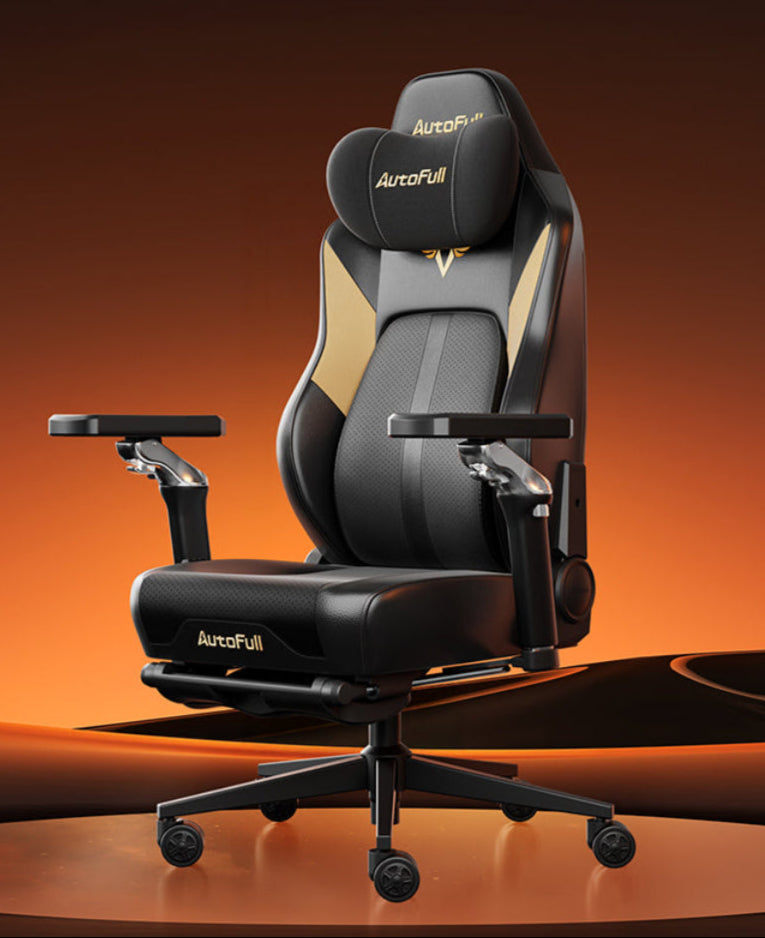


Investing in a premium seat will not automatically stop physical discomfort if you fail to configure it properly. The detachable cushions included with your hardware are not decorative additions; they are essential ergonomic tools. This article explains the exact anatomical locations to place your support cushions to properly align your spine. By learning these precise adjustments, you can eliminate joint fatigue, correct your alignment, and focus entirely on your gameplay without physical distractions.
Why Proper Posture Matters During Long Gaming Sessions
The human spine is not naturally straight. When viewed from the side, a healthy spine has an "S" shape, featuring an inward curve at the neck, an outward curve at the upper back, and an inward curve at the lower back. Maintaining these curves is the biological definition of a correct ergonomic sitting posture.
When you sit in a chair for several hours, your pelvis naturally tends to roll backward. This backward pelvic tilt forces the lower spine to flatten out, entirely removing its natural inward curve. This flattening dramatically increases the physical pressure on your spinal discs and the surrounding muscles. Over time, this sustained pressure results in muscle fatigue, pinched nerves, and chronic soreness.
To actively prevent lower back pain gaming for extended periods, you must artificially support these curves using external hardware. This is precisely why manufacturers include adjustable cushions. They are engineered to fill the physical gaps between your body and the flat backrest of the seat, ensuring your spine remains in its neutral, stress-free "S" alignment regardless of how many hours you play.
How To Position Your Lumbar Pillow
The lower cushion is the most critical component of your setup. Many users place it incorrectly because they misunderstand their own anatomy. Knowing exactly how to position lumbar pillow gaming chair hardware is required to maintain a healthy spinal load.
Identifying Your Lumbar Curve
Sit up completely straight on the edge of your bed or a flat chair. Reach behind your lower back with your hand. You will feel a distinct inward dip just above your belt line and below your ribcage. This inward dip is your lumbar curve (lordosis). This precise gap is exactly what the lower cushion needs to fill.
Step-by-Step Positioning
When determining how to position lumbar pillow gaming chair cushions, follow these exact mechanical steps:
- Sit all the way back in your seat so your buttocks physically touch the junction where the backrest meets the seat pan.
- Slide the lower cushion up or down the backrest straps.
- The bottom edge of the cushion should rest exactly at the level of your belt line.
- The thickest part of the cushion should press directly into the deepest part of your lower back curve.
Proper gaming chair lumbar support should apply firm but comfortable pressure. It should prevent your lower back from flattening against the backrest. If you feel the cushion pushing your upper shoulders forward, or if it feels like it is digging into your tailbone, the placement is incorrect and must be adjusted.
Neck Pillow Placement: Supporting The Cervical Spine
The upper cushion serves a similar purpose for your neck (the cervical spine). Misplacing this cushion causes immediate neck stiffness and tension headaches. Proper neck pillow placement gaming chair users need to learn involves supporting the skull, not pushing it.
The Anatomy Of The Neck
Like your lower back, your cervical spine curves inward. The goal of the upper cushion is to fill the gap between the back of your neck and the flat headrest of the seat. It must support the weight of your head so your neck muscles can completely relax.
Proper Positioning Steps
- Lean your head back normally against the top of the backrest.
- Position the upper cushion so it rests exactly at the base of your skull, right where your head meets your neck.
- The cushion should gently fill the inward curve of your neck.
The most common error regarding neck pillow placement gaming chair setups is placing the pad directly behind the middle of the head. If the pad is behind the widest part of your skull, it will actively push your head forward. This forces your chin toward your chest, creating a hunched posture that severely strains your upper back muscles.
Common Posture Mistakes Gamers Make With Pillows
Even with the cushions perfectly placed, poor bodily habits will negate their benefits. Reading a professional gaming chair posture guide reveals several widespread user errors that cause continuous physical distress.
Slouching Beneath The Cushions
The most frequent mistake is sliding your hips forward on the seat pan. When you slide forward, your lower back drops beneath the cushion. The cushion then ends up pressing against your mid-back (the thoracic spine), actively pushing your spine out of alignment. To maintain a correct ergonomic sitting posture, your hips must remain locked into the back corner of the seat.
Ignoring Recline Angles
Cushions function differently depending on the angle of the backrest. If you recline your seat to 130 degrees to watch a movie, gravity pulls your body differently. You must physically slide the lower cushion slightly higher to maintain support when reclining. Failing to adjust the cushions when you change your backrest angle is a fast way to ruin your alignment.
Removing The Cushions Entirely
Many new users find the cushions uncomfortable during the first week of use and remove them. If you have had bad posture for years, a correct ergonomic sitting posture will feel uncomfortable at first because your weakened muscles are being forced into their proper anatomical positions. You must leave the cushions in place and allow your body a week to adjust to the proper alignment if you want to prevent lower back pain gaming long-term.
Built-In Lumbar Support Vs. External Pillows
As hardware designs evolve, the methods for achieving optimal alignment vary. You will encounter two primary systems for lower back alignment on the market today.
External Strapped Pillows
This is the standard design. The gaming chair lumbar support is a separate foam block attached via elastic straps routed through the backrest cutouts. The primary advantage of this system is vertical mobility. You can slide the cushion up and down to match your exact torso height. However, you cannot adjust the thickness of the cushion. If the foam is too thick for your spine, your only option is to replace it with a thinner aftermarket pad.
Internal Adjustable Mechanisms
Premium models are abandoning external cushions in favor of built-in mechanical systems, similar to luxury car seats. These models feature a dial on the side of the backrest. Turning the dial mechanically extends or retracts a plastic plate inside the backrest. This allows you to control exactly how far the support pushes into your back. While this provides excellent depth control, some internal systems lack the ability to move up and down, making them less ideal if your torso is significantly taller or shorter than the average user.
Conclusion
Properly adjusting your seating accessories is a mandatory step for long-term physical health. Your cushions exist solely to reinforce the natural curves of your spine. By placing the lower pad at your belt line and the upper pad at the base of your skull, you maintain strict spinal alignment. Implement these exact adjustments today to permanently eliminate digital fatigue, protect your joints, and ensure you remain fully comfortable during extended daily use.
FAQs
Why does my back hurt even when I use the lower cushion?
If you still experience discomfort, you likely have the cushion placed too high or too low. Learning how to position lumbar pillow gaming chair units requires trial and error. Ensure it is not resting on your tailbone or pushing into your mid-back. Additionally, check that your hips are fully pushed back into the seat to maintain a correct ergonomic sitting posture.
Should my shoulders touch the backrest when using the cushions?
Yes. Your shoulder blades should rest flat against the backrest. If your lower cushion is too thick, it will push your entire torso forward, preventing your shoulders from making contact. If this happens, you need a thinner lower cushion.
Can proper pillow placement replace physical exercise?
No. While proper placement is necessary to prevent lower back pain gaming, sitting in a static position for hours still restricts blood flow. You must stand up, stretch your legs, and rotate your spine every 60 minutes to maintain joint health.
Is the neck pillow supposed to push my head forward?
Absolutely not. The proper neck pillow placement gaming chair rule dictates that the cushion should only fill the empty space behind your neck. If it pushes your head forward and down, slide it lower until it rests strictly at the base of your skull.
What is the best material for a gaming chair lumbar support cushion?
High-density memory foam is superior to standard sponge foam. Memory foam reacts to your body heat and physically compresses to match the exact shape of your spine, providing customized gaming chair lumbar support without degrading or losing its shape over months of heavy use.


