


![AutoFull G7 Ergonomic Gaming Chair [🍂Autumn Special Offer] AutoFull US](http://www.autofull.com/cdn/shop/files/gaming_chair_1_c5f546de-af69-4926-b5e4-a859ea893772.jpg?v=1777458714&width=70)


![AutoFull G7 Gaming Chair & A4 Pro Gaming Desk Bundle [💥Combo Off] AutoFull US](http://www.autofull.com/cdn/shop/files/20251109-151002.jpg?v=1762672486&width=70)
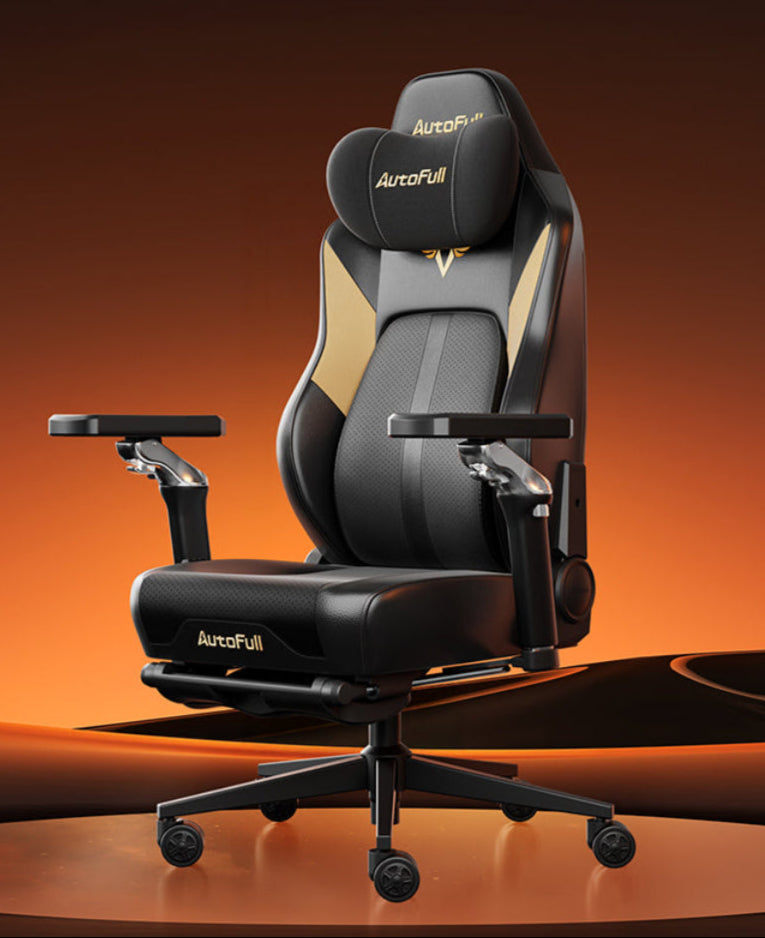


When upgrading your setup, the massive price gap between entry-level and top-tier seating is often confusing. You might continuously ask yourself: is a high end gaming chair worth it? This guide breaks down the exact physical differences in materials, comfort, and structural integrity. By objectively comparing the premium vs budget gaming chair markets, we will help you determine which tier offers the true best value for your physical health, comfort, and your long-term wallet.
Premium vs. Budget Gaming Chairs: Material Quality And Durability
The most immediate physical difference between price tiers is the raw materials used in manufacturing. Manufacturers cut costs strictly through component downgrades, which drastically affects how the product holds up over months of daily friction and heavy weight limits.
Foam Density And Upholstery
When examining a cheap vs expensive gaming chair, the seat padding tells the full story. Entry-level models typically use recycled scrap foam or low-density sponge. After a few months of daily sitting, this cheap foam permanently compresses, leaving you sitting directly on the hard metal frame underneath. Conversely, high-end models utilize high-density cold-cure foam. This specific manufacturing process creates a highly resilient material that retains its original shape and firmness even after years of continuous daily pressure.
Upholstery materials also differ significantly. Budget options feature standard polyurethane (PU) leather, which traps heat and notoriously flakes or peels after a year of friction. Premium models use advanced synthetic leathers engineered to resist scratching, or highly durable, woven fabrics that promote air circulation and prevent sweat accumulation.
Internal Frames And Bases
The structural foundation defines the build quality of gaming chairs. An entry-level model often relies on a wooden plywood seat base and a thin steel frame that can bend or warp. The wheelbase at the bottom is typically molded from basic nylon plastic, which can crack under stress.
Top-tier models feature a unified, thick tubular steel frame wrapped completely around the backrest and seat pan. The wheelbase is constructed from solid, reinforced aluminum alloy. Furthermore, high-end models utilize Class-4 hydraulic gas lifts, ensuring the chair will not slowly sink or fail under the weight of heavier users over time.
Premium vs. Budget Gaming Chairs: Ergonomics And Adjustability
Adjustability dictates physical health. The human body is entirely unique, meaning a chair must adapt to your specific proportions. The lack of custom adjustments is the primary failing point of cheaper models.
Advanced Lumbar Support
A true ergonomic gaming chair must support the natural inward curve of your lower spine. Budget models attempt to provide this by including a basic, foam-filled rectangular pillow attached via elastic straps. These straps frequently stretch out, causing the pillow to slide down to your tailbone, rendering it useless.
Premium models abandon strap pillows entirely. Instead, they feature integrated, internal lumbar support systems built directly into the backrest. Using a mechanical dial on the side of the chair, you can physically extend or retract the internal back support mechanism to match the exact depth of your spinal curve.
Multi-Directional Armrests
Armrest configuration heavily impacts shoulder and wrist fatigue. In a premium vs budget gaming chair comparison, budget models usually feature fixed armrests or "1D" armrests that only move up and down. If your desk is an unusual height or you have wider shoulders, your arms will lack proper support.
Premium chairs are equipped with 4D armrests. These armrests adjust vertically, slide forward and backward, move left and right, and rotate inward or outward at an angle. This total freedom guarantees your elbows are perfectly supported whether you are typing on a keyboard or holding a console controller in your lap.
Tilt Mechanism Hardware
The tilt mechanism underneath the seat pan controls how the chair reclines. Cheap models use a standard tilt mechanism that locks in only one upright position. High-end models utilize a multi-tilt or "frog" mechanism. This advanced hardware allows you to tilt the entire seat base backward and lock it securely at any angle, effectively suspending your body and taking pressure completely off your thighs.
Premium vs. Budget Gaming Chairs: Comfort Over Long Gaming Sessions
Sitting in a chair for ten minutes in a retail store does not test its true comfort. The real test occurs during a six-hour gaming session or a full workday.
Sustained Postural Support
When you evaluate a cheap vs expensive gaming chair during a long session, the cheap chair forces your body to overcompensate. Because the low-density foam flattens and the armrests do not align with your desk, your muscles must physically work to keep you upright. This leads to severe neck stiffness and lower back soreness by the end of the day. A properly adjusted ergonomic gaming chair completely supports your skeletal structure, allowing your muscles to fully relax.
Heat Dissipation And Breathability
Temperature regulation is another critical factor. Sitting on cheap PU leather traps body heat. During an intense gaming session, this leads to excessive sweating and physical discomfort, forcing you to frequently adjust your seating position. Premium models combat this by offering breathable mesh options or highly perforated fabrics that allow ambient air to pass through the material, keeping your skin cool and dry over long durations. Therefore, assessing if is a high end gaming chair worth it often comes down to your local climate and how easily you overheat during gameplay.
Price Vs. Lifespan: Which Is The Better Investment?
Making a purchasing decision requires looking past the initial price tag. You must calculate the total cost of ownership over time.
Warranty And Component Failure
You can directly measure the build quality of gaming chairs by examining the manufacturer's warranty. Entry-level chairs costing around $100 typically offer a standard one-year warranty. Because they use cheaper plastics and low-density foam, they are physically engineered to fail and require replacement within 18 to 24 months.
Premium chairs costing between $400 and $600 usually come with comprehensive warranties ranging from five to twelve years. The manufacturers guarantee the gas cylinder, the aluminum base, and the internal steel frame because they know the materials are strictly industrial grade.
The Cost Per Year Calculation
The true metric for investment is the gaming chair lifespan. If you purchase a $120 budget chair, and it breaks or becomes too painful to use after one year, your cost is $120 per year. If you repeat this cycle, you will spend $600 over five years, enduring poor posture and discomfort the entire time.
Conversely, if you purchase a $500 premium model backed by a five-year warranty, your maximum cost is $100 per year. By examining the standard gaming chair lifespan, the premium model is mathematically cheaper in the long run. You save money while simultaneously enjoying vastly superior spinal support, making the higher upfront cost a safer financial decision.
Conclusion
Ultimately, deciding whether to purchase a premium vs budget gaming chair depends on your daily usage. If you only sit at your desk for an hour a day, a budget model is structurally sufficient. However, if you work from home or play games for several hours consecutively, investing in premium components is mandatory. The superior ergonomics protect your spine, and the heavy-duty materials eliminate frequent replacement costs, proving that high-end models offer the best long-term value.
FAQs
Is a high end gaming chair worth it for office work?
Yes. If you work from home and spend eight hours a day at your desk, the ergonomic benefits are identical whether you are gaming or typing spreadsheets. The adjustable lumbar support and high-density foam prevent the chronic lower back pain commonly associated with cheap office seating.
What is the average gaming chair lifespan?
A budget model typically lasts between 1 to 2 years before the foam permanently flattens or the artificial leather begins peeling. A premium model featuring cold-cure foam and a steel frame has an average gaming chair lifespan of 5 to 10 years, heavily supported by extended manufacturer warranties.
Does the build quality of gaming chairs actually affect my health?
Absolutely. The build quality of gaming chairs dictates how well the seat holds your spine in a neutral position. Weak internal frames and sinking gas cylinders cause your body to slouch continuously, which leads to nerve compression and chronic muscle fatigue over time.
What is the biggest physical difference in a cheap vs expensive gaming chair?
The most impactful difference in a cheap vs expensive gaming chair is the adjustability and the foam density. Expensive chairs allow you to fine-tune the armrests, backrest angle, and lumbar depth to your exact body measurements, while utilizing foam that does not degrade under heavy weight.
Can an ergonomic gaming chair fix back pain?
While a chair cannot medically cure an existing spinal injury, an ergonomic gaming chair heavily prevents the mechanical strain that causes daily back pain. By properly supporting your lumbar curve and taking pressure off your tailbone, it allows your back muscles to relax and heal naturally.
How should I decide between a premium vs budget gaming chair?
Calculate your hours. If you sit in the chair for less than two hours a day, save your money and buy a budget model. If you sit in the chair for more than four hours daily, a premium vs budget gaming chair comparison clearly shows that spending more upfront will save you from joint pain and future replacement costs.


